• With volatility reverberating through global capital markets over recent weeks amid concerns over slowing economic growth and a divisive geopolitical climate, lesser-known bond issuers are facing an uphill battle to complete new deals in the market, according to five buysiders and two sellsiders.

    While recognizable issuers such as Transocean, Netflix, United Rentals and Anixter have been able to price drivebys, companies such as HC2 Holdings and Vector Group have been forced to widen pricing expectations, while GFL Environmental and INTL FCStone have pulled bond deals from the market entirely.

    “These [issuers] knew that it wasn’t going to be cheap to come to the market, regardless of market conditions,” said one buysider. “Then, they came at a time when yields are higher, spreads are widening and equities are down. So it’s like a perfect storm.”

    US speculative grade bond yields have now risen roughly 100bps this year to 6.83%, according to the ICE BofAML US High Yield Index. While analysts noted that a portion of that increase was down to widening Treasuries, more than 60bps of if has come in October amid a selloff in equities.

    The Dow Jones Industrial Average and S&P 500 indices bounced 3.5% and 2.5%, respectively, off of lows achieved within the last week amid some improving signs from corporate earnings, but are still down 5.5% and 6.9% for October.

    Oil prices have also dropped, hurting new bond deals from the likes of oilfield servicer KLX Energy Service and onshore driller GEP Haynesville. After peaking at USD 76 per barrel at the beginning of October, WTI is now trading in the USD 66-67 range.

    “When equities started melting down two weeks ago, everyone knew and expected that oil would be affected just because it’s a risky investment,” one of the buysiders said. “Now, the risk is multiplied with the trade restrictions, the speculation in Saudi Arabia and so many other macro things.”

    KLX Energy Service ultimately priced its B3/B USD 250m senior secured bond due 2025 at 11.5%, as the newly spun-off company grappled with market conditions and recent supply from other energy services issuers.

    Meanwhile, GEP Haynesville pulled its B3/B USD 600m senior unsecured bond offering due 2023—its debut deal—more than a week after it launched, according to a Bloomberg report today.

    Investors expected yields to tick up as the Fed increased rates, but the Fed’s tightening of monetary policy has intersected with the midterm elections, geopolitical tensions, and increasingly cautious forward earnings guidance from US corporations, the sources said.

    Some investors are waiting for Election Day to come and go before diving into new issuance, amid chances of a shake-up in Congress, two buysiders said.

    “If Dems take control of either house, the tension could lead to gridlock in Washington,” a second buysider added. “Neither party will be able to get anything done, and with the market as fragile as it is, that could be a cause for a bear market.”

    Many of the recent deals in high yield have also been smaller in size and from smaller companies. That has driven concerns about liquidity, said another buysider.

    “In a situation where we’ve seen such big moves downwards, we’re still searching for a bottom and liquidity is starting to be a big concern,” said the buysider. “With these smaller and less liquid deals, people need more clarity than we currently have.”

    The average size of HY bonds in the past two weeks of October is USD 536m, with the majority under USD 400m. Of those smaller deals, only one—Anixter—has priced tighter than 10%.
  • HC2 Holdings bankers are floating wider pricing thoughts and revised terms for its proposed bond refinancing amidst choppy market conditions, according to four buysiders following the deal.

    Lead bank Jefferies is now marketing the B-/Caa1 USD 535m senior secured bond offering as three year non-call 1.5 year paper, versus the original five-year non-call two year structure, the sources said. Price whispers have widened to a 10% coupon with a 97.5 OID from initial whispers in the 9.25%-9.5% range.

    The roadshow may last until later this week or seep into early next week, though Jefferies initially aimed to conclude it today, speculated two of the sources.

    Proceeds for the bond refinance the company’s existing USD 510m 11% senior secured notes due 2019. The 11% notes softened slightly today to trade at 99.5 to yield 11.482%, from trades at par at the beginning of the roadshow last week, according to MarketAxess.

    HC2 is a diversified holding company with eight reportable segments: construction, marine services, energy, telecommunications, life sciences, broadcasting, insurance and other, according to company documents.

    Moody’s estimates that HC2’s leverage at 30 June was 11.1x, but its 12-18 month forward view is that leverage will decline to 7.6x, according to a 24 October credit report.

    Sources attribute jitters in the high yield primary market to the recent equities selloff, as the S&P 500 has shed more than 8.5% from its all-time high in September and the Dow Jones Industrial Average is off by more than 7.6%. Amid the volatility, GFL Environmental scrapped the bond portion of its M&A financing in favor of a larger loan, while KLX Energy widened pricing to 11.5% for its proposed bond.

    Jefferies declined to comment. The company did not respond to a request for comment.

  • KLX Energy Services acquisition of Motley Services positions the oilfield servicer for growth. But getting there won’t be cheap as the newly spun-off entity’s financing proposal is up against choppy trading conditions and recent deal saturation from other energy issuers, said six buysiders.

    Price talk for KLX’s B3/B seven-year USD 250m senior secured notes was circulated this morning in the 10.5% to 10.75% range, sitting between initial whispers in the 9.75% area earlier this week and widened whispers in the 11% area yesterday (25 October).

    JPMorgan is lead bookrunner. Books are expected to close at 2pm ET today, pricing thereafter.

    With oil prices hovering in the USD 66-67 range and global stock markets flirting with a correction, many buysiders are becoming more focused on the downside scenario for smaller, E&P-dependent companies, such as oilfield servicers like KLX or raw material providers like Hi-Crush Partners, whose USD 450m 9.5% unsecured notes due 2026 sunk to the mid-80s this week after pricing at par in late July.

    “While [KLX is] not as at risk as someone like Hi-Crush which is at the end of the tail and can just get flicked off in bad times, they are still on the tail,” said one buysider. “If oil prices fall because of demand and or constraints on completing wells, or if pipeline capacity is not on schedule, that could impact performance.”

    Others buyside sources said they were wary of investing in another relatively small energy service company, given that KLX’s deal comes on the heels of a debut deal last week from fellow oilfield servicer Nine Energy Service.

    “It’s the same story,” said one buysider. “I thought that Nine Energy was special and unique, and now it’s clearly not. So what makes this different than Nine or another small service company that’s evidently going to come to the market?”

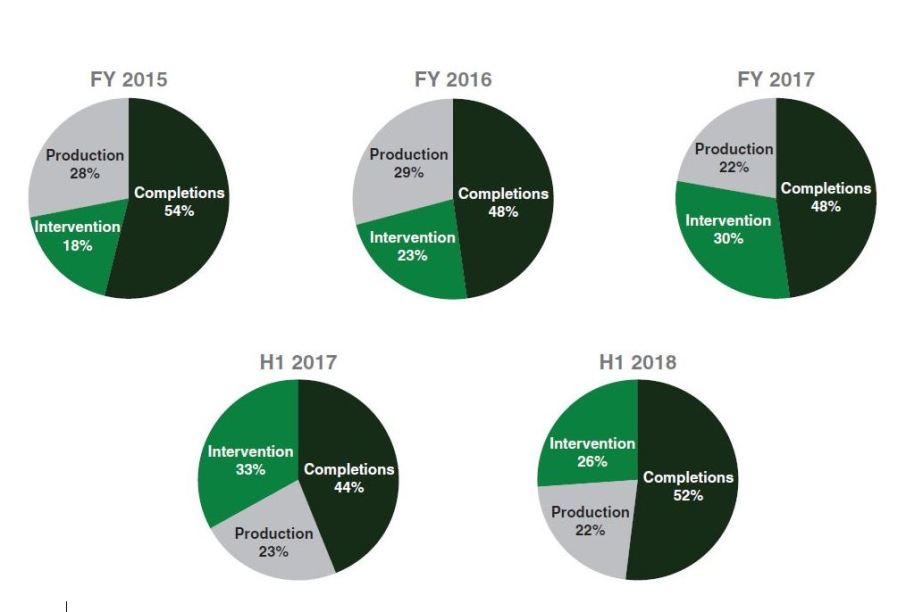
    KLX Energy provides completion, intervention and production services including downhole tools. It was spun off from its parent KLX Inc. just last month. The Motley acquisition adds new tools such as coiled tubing services, primarily in the Permian Basin.

    Given its short operating history, buysiders said the company needed to prove itself as a standalone entity. With that in mind, the company’s management team—many board members and senior executives were also senior management figures at B/E Aerospace—appealed to investors looking at the deal.

    “That’s a good legacy,” said one buysider. “B/E was always a bellwether HY credit, the place you hid out during bad times. This is basically the same management team running KLX.”

    KLX is pitching the deal on leverage of 2.8x, based on pro forma adjusted EBITDA of USD 88.2m and total debt of USD 250m, according to deal documents.

    Those numbers do not take into account the impact of the Motley acquisition—based on annualized 3Q18 adjusted EBITDA guidance of USD 106m for KLX and an annualized mid-point figure of USD 46m for Motley, the combined company is expected to generate USD 152m in EBITDA, according to deal documents.

    Based on those EBITDA figures, KLX is expected to generate free cash flow of USD 54m, factoring in USD 25m of interest costs, USD 63m of capital expenditures and USD 10m in cash taxes, sources said.

    Pro forma liquidity is USD 227.9m, based on the company’s USD 155.4m cash position and USD 72.5m availability on its USD 100m ABL due 2023.

    “That’s decent for energy, but it’s not good for M&A, especially for a company in aggressive growth mode,” a buysider said.

    Deja vu?

    Nine Energy, another public oilfield servicer, priced its five-year USD 400m senior unsecured notes last week, pitching a similar story as KLX—relatively low leverage, patented equipment—as reasons for investors to fund its acquisition of Magnum Oil Tools International.

    Pricing may have been pushed wider on KLX partly because investors who bought Nine Energy did not have space for a similar company so soon afterwards.

    Despite its greater leverage, some sources said they preferred 3.3x levered Calfrac to KLX—especially after the servicer reported a 41% increase in EBITDA year-over-year—because it is a larger Canada-focused company with less Permian exposure than KLX.

    Calfrac’s B3/B- USD 650m 8.5% senior unsecured notes due 2026 traded yesterday at 90 to yield 10.428%, according to MarketAxess. Nine Energy’s B3/B USD 400m 8.75% senior unsecured notes due 2023 last traded yesterday at 101.5 to yield 8.301%, according to MarketAxess.

    The company did not respond to a request for comment. JPMorgan declined to comment.

  • Vanguard Natural Resources is working with BMO Capital Markets to gauge investor interest in a potential debt offering to ease its liquidity crunch, according to two buysiders familiar with the situation.

    The exploration and production company, which emerged from bankruptcy last year, is considering a debt raise—most likely a secured deal—to shore up its capital structure following earnings pressure and heavy revolver drawdowns, the sources said.

    The company—which is 5.6x levered based on USD 159m of LTM adjusted EBITDA and USD 906m total debt—has drawn USD 689m under its USD 703m revolving credit facility due 2021, filings show. Factoring in USD 7.5m of cash on balance sheet, total liquidity is just USD 21.5m.

    Vanguard filed for Chapter 11 bankruptcy in 2016 after missing a coupon payment, as reported by Debtwire. Since emerging from bankruptcy in August 2017, it has struggled to gain earnings traction amid steep natural gas price differentials.

    The company has been trying to sell non-core assets to focus on its Pinedale and Arkoma basin facilities. Most recently, it worked with RBC to divest wells in Colorado’s DJ Basin for roughly USD 14.5m, according to a company announcement.

    While asset sales would bring in much-needed cash, they would also impact its borrowing base under the revolver, making some form of refinancing or recapitalization more pressing, sources said—although they added that potential lenders would also like to see more progress on asset sales.

    “If they close more asset sales, the borrowing base will decline as well, due to the low natural gas environment and [the company’s] production mix,” said one of the buysiders.

    The facility’s borrowing base was last redetermined in August, and is expected to undergo another redetermination next month.

    In addition to the revolver, the company’s capital structure includes a USD 124m Libor+ 750bps term loan due 2021, USD 81m of 9% second lien secured notes due 2024 and USD 13m in lease financing obligations.

    The term loan is quoted in the 85/88 context, in line with recent levels but down from quotes at par last year when the company emerged from bankruptcy, according to Markit.

    BMO did not respond to a request for comment. The company did not respond to a request for comment.

  • Investors flocked to Netflix’s latest bond offering after the company demonstrated strong subscriber growth to back up its cash-burning strategy—but with its cost of capital rising, any change in that trend will quickly impact the company’s access to the bond market, said six buysiders and one sellsider following the deal.

    The USD 2bn Baa3/BB- dual-currency 10.5-year offering is oversubscribed, and is set to price today. Lead bank Morgan Stanley this morning widened talk for the USD 800m tranche to 6.375%, back in line with initial whispers, but still just wide of talk in the 6.25% area. The USD 1.26bn-equivalent euro tranche also widened to 4.625% from 4.5%, in line with initial whispers.

    Despite the pricing fluctuation amidst today’s market volatility, the notes are still set to have the highest coupon on Netflix’s balance sheet—followed by 5.875% on the USD 800m 2025s it issued in February 2015 and the USD 1.9bn senior unsecured notes due 2028 it priced in April this year, and 5.75% on the USD 400m 2024 notes it sold in 2014.

    The pricing reflects the company’s increasing leverage and raises the bar for the level of growth creditors will expect to see in order to continue funding the company’s heavy cash burn as it seeks to consolidate and vertically integrate its position in the TV and film industry, said buysiders.

    “They’re on a subscriber treadmill, and they keep increasing the speed of the treadmill,” said one. “So far, they‘ve been able to keep up or ahead of how fast the treadmill’s going. But when the economy turns or at least when the market turns and that subscriber growth isn’t going anywhere, they won’t be able to tap the high yield market.”

    The company’s yields have risen since it priced its last deal in April—partly thanks to rising rates but also after underwhelming subscriber growth for the second quarter. Those 5.875% notes traded today at 98 to yield 6.144%, according to MarketAxess.

    Pro forma the new deal, Netflix is 5x levered based on USD 10.4bn of total debt and about USD 2bn in LTM adjusted EBITDA as of 30 September, according to deal documents. Pro forma cash is roughly USD 5.1bn, leading to net leverage of 2.7x. Liquidity includes an undrawn USD 500m revolver.

    House of cash burn

    The company expect to burn around USD 3bn for 2018 and 2019, as it continues to invest in acquisitions and new content, sources said—with most adding that they were happy to fund that spending, as it helps Netflix build sticky subscriptions while lowering its production costs in the long term.

    “They’re trying to build a moat around the business model,” said one buysider. “They can become free cash flow positive whenever they want to, but original content would be the lifeblood of the company by then.”

    Netflix reported that subscriptions grew by 7 million in 3Q, much higher than its projected 5 million target. The results counteracted 2Q’s miss, where subscription growth of 5.2 million was lower than the company’s 6.2 million forecast. Netflix now has 137 million subscribers in total.

    CFO David Wells said on the 3Q earnings call that the company expects to see “material improvements” in its cash flow profile in 2020—although he cautioned that break-even cash flow was still some way off.

    “We still think it’s going to be a few years towards breakeven because we’re optimizing again for long-term cash flow and long-term profitability, and we think that’s the right thing,” he said.

    The good place

    As Netflix’s debt load continues to grow, creditors are increasingly turning their attention to the possible timing of its transition to a less capital-intensive model and the impact that could have on subscriptions.

    “Eventually they have to make money,” said one of the buysiders. “You can’t just keep ploughing your negative free cash flow into content. The question is going to be when they turn down the content spigot, what happens to their [subscriber] churn.”

    Price elasticity is a key question the company will have to address over the coming quarters as this shift comes into focus.

    “If they raise prices 20%, will they have much churn? No. If they do 50%, will they have churn? If they do it overnight, yes, but if they ease into it, then they could do it. That’s what future profitability will depend on,” the buysider said.

    Investors said that new streaming competitors such as AT&T/Time Warner, Disney, Wal-Mart and YouTube don’t pose an immediate threat to Netflix—so long as Netflix continues to grow subscriptions in the near term.

    Competitors have to contend with Netflix’s international market reach and increasing library of content, six of the sources said. That said, one of the main hurdles Netflix must clear is HBO and Disney pulling content from Netflix in support of their own streaming services, said three of those sources.

    “The model’s good for now, but there are hiccups down the road,” one of the buysiders said.

    Fuller house

    The next step in Netflix’s vertical integration is acquiring its own production studio, which could prove to be a defensive move for the company down the line, sources said. The company announced earlier this month that it plans to purchase its first studio complex in Albuquerque, New Mexico, according to a press release.

    The weak covenant protections in the company’s bonds would likely allow them to make use of a key asset like a production studio if the company found itself in financial distress, said one of the sources.

    “They could build up and then spin off the production arm if there comes up a point when they need to,” the buysider said. “They could get a good valuation for that, and that would bring into effect the bond covenants, which aren’t the best.”

    Netflix’s stock traded today at USD 320 for a USD 139bn market cap, roughly in line with where it was at the time of the April bond deal but up significantly on the year.

    Netflix and Morgan Stanley declined to comment.

  • Uber’s debut bond deal is oversubscribed and is expected to price today, after a secretive syndication involving private credit ratings and tightly controlled offering documents, according to four buysiders following the transaction.

    The USD 1.5bn senior unsecured bond deal comes as banks pitch the company for an IPO that could take place as early as next year and value Uber at up to USD 120bn, according to media reports — nearly double the company’s valuation when it raised money from Toyota earlier this year.

    Official price talk for the Morgan Stanley-led bond offering was circulated yesterday, in line with earlier whispers at 8% area for the USD 1bn notes due 2026 and 7.5% area for the USD 500m tranche due 2023. Books close at noon today (16 October), with pricing expected thereafter.

    The deal, which has received private ratings of B3/B- from Moody’s and S&P, has an investment-grade style covenant package lacking the investor protections usually found in high yield bonds, such as provisions around restricted payments and the use of asset sale proceeds, sources said.

    During an exclusive roadshow with what buysiders referred to as “friends and family” investors — firms that have supported the company in previous capital raises — Uber executives told investors they did not expect the company to generate EBITDA for at least the next three years.

    The fact that Uber is able to execute a deal without typical covenants protections despite its single-B rating and heavy cash burn suggests investors have a high degree of faith in the company’s future growth potential, said buysiders following the deal.

    “Typically [an IG-style covenant package] means the company is a high BB that will potentially get rated IG over the life of the bond,” said one. “[This is] a single-B name that’s burning cash for the next three years, and they’re doing IG covenants.”

    During the marketing process for the bond — which kicked off with a non-deal roadshow the week before last — management said the company would continue its strategy of aggressive growth through its own innovations as well as acquisitions and partnerships, said buysiders who attended the roadshow.

    Having bought JUMP Bikes earlier this year as well as investing in scooter start-up Lime, Uber is also in talks to put in a bid to purchase London-based food delivery service Deliveroo for GBP 1.5bn (USD 2bn), according to media reports.

    Uber plans to dedicate a large portion of its expected USD 600m capex to developing autonomous vehicles, sources said.

    As the currently asset-light company expands into more physical technologies, the bonds’ lack of protections around the use of asset sale proceeds could begin to look short-sighted, said buysiders.

    “There’s this notion that Uber will go from just a software company to a massive buildout,” said one. “So, it really matters to investors how much [asset] value you attach to Uber.”

    Ultimately, however, investors are putting faith in the company’s equity story, with one source referring to the deal as a “bridge to the IPO”.

    Nevertheless, Uber needs the offering to trade well after pricing, sources said. The company told investors it aims to be a repeat issuer going forward — a strategy that would resemble fellow cash-burning tech company Netflix’s regular use of the bond markets after its IPO.

    The 4(a)2 bonds are settling through US Bank rather than DTC, which should help them trade better after pricing, and are expected to eventually receive a 144A Cusip, giving them a potential liquidity boost, sources said.

    Morgan Stanley declined to comment. Uber did not respond to a request for comment.

  • By Paula Seligson and Farhin Lilywala

    Uber knows a lot about its users—where they travel, what they eat, how much riders spend, and how much drivers earn. But when it comes to its own finances, the company is keeping a tight leash on information, even as it asks investors for billions of dollars of new funding.

    The ride-sharing platform is currently marketing its first ever high yield bond to a select group of investors as part of a private offering, a placement that’s more secretive than typical broadly syndicated bond deals.

    The proposed $1.5 billion deal, first reported by Debtwire earlier this week, will take Uber’s available liquidity to roughly $10 billion. But the company is expected to burn roughly $3 billion of cash this year as it continues to spend heavily to fund its rapid growth.

    During their pitch to investors, Uber executives said the company should generate $10-$11 billion of revenue this year, but that it would book negative EBITDA to the tune of $2 billion. EBITDA should reach break-even levels in around three years, they added.

    The deal is the latest example in a recent trend of disruptive, fast-growing companies that are tapping the debt markets for funding, following similar deals over recent months from the likes of WeWork, Tesla and Carvana.

    Debt investors usually shy away from companies that don’t generate positive cash flow to pay interest on their debt. But despite the risks, Uber’s dominance in the ride-sharing space and its growth ambitions in new markets such as autonomous driving make it an exciting proposition, high yield bond investors told Debtwire.

    “The initial bond deals for the other tech darlings went well. I would suspect this one for Uber will go even better,” said one of those sources.

    Investors are also attracted by the ample returns Uber is offering. The company is looking to price the deal with interest rates in the region of 7.5% for the $500 million five-year tranche and 8% for the $1 billion eight-year portion. Pricing is expected next week.

    Uber is currently a private company, but CEO Dara Khosrowshahi wants to take it public next year.

    Over recent years, the company has attracted huge injections of equity funding from investors such as SoftBank and strategic partners like Toyota, the most recent of which valued Uber at $76 billion.

    As it prepares for its IPO, the funding from the bond deal will give Uber more financial firepower to grow its existing business as well as develop new technologies, strike partnerships and acquire potential competitors.

    Uber bought bike-sharing start-up JUMP Bikes earlier this year, invested in motorized scooter provider Lime and put money into developing flying cars.

    The company is expected to be a regular issuer in the high yield market after it goes public.

    “Once they get their public equity in place, they’ll use the debt markets to kind of backfill any kind of incremental funding needs they’ll have as they continue to grow,” said another investor looking at the deal.

    Such a strategy would be similar to Netflix’s approach to debt funding. Netflix went public in 2002, long before it first accessed the bond markets in 2009—but it continues to issue ever bigger deals as it burns through cash in the drive to create new content and cement its position in the film and TV space.

    Because Uber has negative EBITDA, its debt-to-EBITDA ratio – the standard measure of leverage used by high yield investors – is essentially irrelevant, said sources following the deal. Instead, the company is focusing on its debt-to-equity ratio, which it wants to keep below the double digits going forward.

    Based on roughly $4 billion of total debt—including the new unsecured bonds alongside existing floating rate loans—Uber has a debt to equity ratio of about 5%. Including convertible debt, that jumps to 9.2%.

    Paula Seligson and Farhin Lilywala are Debtwire reporters covering the high yield bond market. They can be reached at Paula.Seligson@acuris.com and Farhin.Lilywala@acuris.com

    https://www.forbes.com/sites/debtwire/2018/10/12/uber-says-its-three-years-from-turning-a-profit-as-it-pitches-debut-bond/?fbclid=IwAR0udRpP3EH_eqekvDF4bai1_4rG7uq_fOwNJjkbvbsMltpBxUpLUMVY6R0#3012bfc65e0e

  • Uber is in the market with its first-ever bond deal, a private offering marketed to “friends and family” investors. It’s the latest in a recent crop of fast-growing but cash-burning companies tapping the high yield markets—this week, Uber told investors they would likely have to wait another three years before the company generates EBITDA.

    In this podcast, Debtwire associate editor Will Caiger-Smith gets the inside scoop on the tightly run syndication from high yield reporters Farhin Lilywala and Paula Seligson, who broke the news of the deal earlier this week.

    CLICK HERE to listen to the podcast

  • by Farhin Lilywala, Paula Seligson and Anastasia Donde
    Uber is working with Morgan Stanley on outreach related to raising around USD 1.5bn via an unsecured bond deal, said two buysiders and two trading sources.
    The company has outlined a dual-tranche structure that includes an eight-year non-call three piece whispered at 8% and a five-year non-call two piece at 7.5%, two of the sources said. An investor call will take place tomorrow (10 October) at around noon to discuss the deal, two of the sources added
    Some buysiders are comping a potential Uber debut bond deal to recent new issues from fellow early-stage businesses WeWork and Tesla.
    WeWork placed a USD 702m 7.875% senior unsecured note due 2025 this past April. The bonds last traded at 96 to yield 8.686% on Friday (5 October), according to MarketAxess. Tesla’s USD 1.8bn 5.3% senior unsecured notes due 2025, priced in August 2017, traded today at 84.375 to yield 8.34%, down slightly from 85.5 on Friday (5 October).
    Though Uber doesn’t currently have any high yield bonds, it has tapped the leveraged loan market – most recently in June for a repricing also led by Morgan Stanley. In that deal, the borrower repriced its USD 1.133bn TLB due 2023 to Libor+ 350bps (0% floor).
    The term loan is quoted in the 100.275/100.725 context today, in line with recent levels, according to Markit.
    Uber recently reached a USD 148m settlement agreement over allegations it concealed a 2016 data breach in violation of state laws.
    TERMS:
    • Led by Morgan Stanley
    • USD 1.5bn senior unsecured notes offering
    • Eight-year, non-call three tranche whispered at 8%
    • Five-year, non-call two tranche whispered at 7.5%
    • Sector: technology
    • Business description: provides ride-hailing transportation software services
    • Privately owned
    Representatives for Uber and Morgan Stanley, respectively, didn’t respond to inquiries.
  • [Editor’s note: This is an update of a Debtwire story published earlier today, to add additional intelligence in the second paragraph about the timing of an investor call.]

    Uber is working with Morgan Stanley on outreach related to raising around USD 1.5bn via an unsecured bond deal, said two buysiders and two trading sources.

    The company has outlined a dual-tranche structure that includes an eight-year non-call three piece whispered at 8% and a five-year non-call two piece at 7.5%, two of the sources said. An investor call will take place tomorrow (10 October) at around noon to discuss the deal, two of the sources added.

    Some buysiders are comping a potential Uber debut bond deal to recent new issues from fellow early-stage businesses WeWork and Tesla.

    WeWork placed a USD 702m 7.875% senior unsecured note due 2025 this past April. The bonds last traded at 96 to yield 8.686% on Friday (5 October), according to MarketAxess. Tesla’s USD 1.8bn 5.3% senior unsecured notes due 2025, priced in August 2017, traded today at 84.375 to yield 8.34%, down slightly from 85.5 on Friday (5 October).

    Though Uber doesn’t currently have any high yield bonds, it has tapped the leveraged loan market – most recently in June for a repricing also led by Morgan Stanley. In that deal, the borrower repriced its USD 1.133bn TLB due 2023 to Libor+ 350bps (0% floor).

    The term loan is quoted in the 100.275/100.725 context today, in line with recent levels, according to Markit.

    Uber recently reached a USD 148m settlement agreement over allegations it concealed a 2016 data breach in violation of state laws.

    TERMS:

    • Led by Morgan Stanley
    • USD 1.5bn senior unsecured notes offering
    • Eight-year, non-call three tranche whispered at 8%
    • Five-year, non-call two tranche whispered at 7.5%
    • Sector: technology
    • Business description: provides ride-hailing transportation software services
    • Privately owned

    Representatives for Uber and Morgan Stanley, respectively, didn’t respond to inquiries.