• Cooke Omega bonds sank after the company circulated 2Q18 earnings to investors last week, including a 30% year-over-year EBITDA drop, according to three sources familiar with the situation. The privately owned fish products and aquaculture company attributed the YoY drop in EBITDA and sales to a bad fishing season, they said.

    The company’s USD 330m 8.5% senior secured notes due 2022 dropped two points after the earnings were released last Tuesday, trading at 99.75 to yield 8.565%, according to MarketAxess. They clawed back a point and last traded at par on 15 August.

    The company reported USD 13m of EBITDA for the second quarter, versus USD 18.7m in the prior-year quarter, and a 12% drop sequentially from 1Q18, the sources said. Management credited the year-over-year crash to lower fish catch and production volumes for the 2017 fishing season, the sources added.

    Cooke Omega generated USD 75m of sales in 2Q18, down 20% year-over-year, but up 5% from 1Q18.

    Sales in its animal nutrition segment were down 23% YoY driven by lower inventory as a result of 2017 lower fish catch/yield and contract timing. Its other segment, human nutrition, booked a sales decline of 17%, driven by decline in coconut oil sales and the delisting of a home shopping network product.

    The company had drawn USD 30m under its USD 100m ABL revolver due 2022 as of quarter end, and has USD 9.6m in cash on its balance sheet, according to sources.

    Leverage is about 7x, based on USD 349m of total debt and around USD 49.8 of LTM EBITDA, or 6.8x net of USD 9.6m in cash, sources estimated. When the bonds were placed in December 2017, the company was levered 5.3x based on USD 60m of LTM adjusted EBITDA.

    The company was formed in late 2017 when privately owned Cooke acquired Omega Protein, tapping the market for the five-year secured notes offering to fund acquisition. The BMO-led deal struggled in syndication, and eventually priced at an 8.5% coupon, with an OID of 97.058 for a 9.25% yield. To get the deal over the line, the borrower made investor-friendly changes including a reduced maturity and non-call period, a reduced credit facility carveout and tighter restricted payments and permitted liens covenants.

    Cooke is on a trajectory implying annual cash burn in the neighborhood of USD 15m, as lower capital expenditure is offset by the EBITDA drop, according to one of the sources. The company expects to return to a historical capital expenditure level of around USD 35m this year – down from around USD 47m in 2017 due to a vessel refurbishment program – and has annual debt service around USD 29m, compared to its USD 50m in LTM EBITDA.

    Cooke Omega did not respond to requests for comment.

  • Tapstone Energy booked USD 37.5m of adjusted EBITDA in 2Q18, up 26.7% year-over-year, according to two sources familiar with the situation.

    The bottom line uptick was due in part to higher production levels in the NW Stack assets. The E&P player’s NW Stack assets in Oklahoma averaged a production rate of 17.8 million barrels of oil equivalent per day (mboe/d) in 2Q18, the sources continued. Total production for the quarter came in at 30.1 mboe/d, representing a 1% uptick from 1Q18 and a 15% increase year-over-year. As such, the top line also grew, with revenue in the period coming in at USD 62.7m from USD 54.35m in 2Q17, the sources added.

    Despite the earnings growth, Tapstone’s liquidity position has raised concerns for some investors, given heavy reliance on the revolver, the sources said. At quarter end, Tapstone’s liquidity stood at USD 137.7m, which included just USD 1.3m in cash and USD 136.4m available on its USD 310m revolver due 2023.

    “You’re basically living off of your credit card, and the credit limit likely isn’t going to be increased and you still have your interest payments to think about,” one of the sources said.

    The GSO-owned E&P company paid down USD 13m of its revolver in the recent quarter, and bought back USD 5.5m of its senior notes, ending its repurchasing program for its senior notes, according to the sources. “It’s good to repay your revolver…but as for the notes, it’s not big enough to be meaningful so why do that?” the first source said.

    The borrower’s USD 300m 9.75% senior unsecured notes due 2022 last traded in size on 7 August at 88 to yield 13.898%, up from the 85/86 context in May around the time when 1Q results were announced, according to MarketAxess.

    On a sequential basis, EBITDA in 2Q18 is down 2.8% from 1Q18, the sources noted. The quarter-over-quarter downslide was attributed in part to weaker realized pricing, caused by hedges.

    The producer’s 2Q18 capital expenditure totaled USD 73.5m, of which USD 62.6m was engaged in drilling and completion and USD 4.7m was used in NW Stack asset acquisition. The company increased its drilling and completion budget for the year to USD 235m from USD 220m. Tapstone also projects an additional USD 15m of leasehold, seismic, midstream and corporate capex, sources said.

    The company could burn around USD 117m of cash this year, assuming USD 152m of annualized 1H18 EBITDA, USD 235m of capital expenditure, and USD 34m of interest expense, estimated one of the sources.

    Tapstone did not respond to requests for comment.

  • NOVA Chemicals’ 2Q18 earnings growth gave its bonds a boost, bolstering investor optimism that it will be able to navigate the financial impact of ongoing litigation, said two sources familiar with the matter. The positive momentum will also help the company execute on growth plans scheduled to occur over the next few quarters.

    The company’s USD 1.05bn 5.25% senior unsecured notes due 2027 traded up nearly two points to 96 yielding 5.836% on Wednesday (8 August) after the earnings call, while its USD 500m 5% senior unsecured notes due 2025 traded today at 96.75 to yield 5.586%, up nearly a point from a print of 95.875 on 2 August, according to MarketAxess.

    The ethylene producer reported USD 376m of EBITDA, a 25% increase year-over-year from USD 301m, driven by higher volumes and more favorable pricing, especially in polyethylene. Quarterly revenue stood at USD 1.1bn, up roughly 28% from USD 863m generated during the corresponding period, sources said.

    Still, investors remain somewhat on alert regarding liquidity, with the potential payment of damages to Dow Chemical, a healthy projected capex and a dividend payment to parent Mubadala expected to coincide in 2H18.

    In 1997, NOVA entered into a joint venture agreement with Dow Chemical’s predecessor Union Carbide to operate an ethylene production plant in Alberta. In 2006, Dow filed a dispute against NOVA, alleging a failure to optimize production at the JV, while Dow claimed that an ethane shortage created the low production.

    After years of disputes, a judge ruled in favor of Dow in June, requiring NOVA to pay approximately USD 1.06bn to Dow for damages incurred between 2001 and 2012. NOVA could pay an additional USD 250m-350m in damages for damages incurred from 2012 to 2015. NOVA appealed the decision in July.

    “The appeal doesn’t hurt. Any delay works in their favor,” one of the sources said.

    NOVA’s liquidity now stands at USD 1.75bn, including USD 621m of cash on hand, sources said. The company expects to maintain liquidity in the USD 650m-USD 850m range pro forma the USD 1.05bn payment to Dow and planned capex. Factoring in the additional litigation payment and USD 250m parent payment, sources estimates that liquidity would end up on the lower end of the guidance, or just below it.

    Capex guidance for 2018 now totals USD 800m, reduced from USD 900m, due to USD 100m in deferred capex related to a new polyethylene plant.

    NOVA is levered 2.3x, based on an LTM EBITDA of USD 1.35bn and USD 3.1bn in total debt, sources said.

    The company last tapped the market in June 2017 for the 2027 notes to fund the acquisition of the Geismar ethylene plant from Williams Partners.

    Calls to NOVA were not returned.

  • Past controversies around Herbalife—and multi-level marketing companies in general—have discouraged some buysiders from investing its latest bond and loan deal. But the new refinancing debt package got upsized this week and ended up pricing tight of talk, showing that the controversial company’s credit story has more than enough backers.

    On our latest podcast, recorded 10 August, Associate Editor for Debtwire Par, Will Caiger-Smith, speaks with High Yield Bond Reporter Farhin Lilywala and Leveraged Loan Reporter Yifan Yu about Herbalife’s latest financing and its future outlook.

    CLICK HERE to listen to the podcast.

  • 24 Hour Fitness reported a slight uptick in EBITDA and revenue for 2Q18, which provided a nudge to the highly-levered gym operator’s minimal free cash flow, said three sources familiar with the matter.

    The borrower’s USD 850m Libor+ 350bps (0% floor) TLB due 2025, issued in a refinancing this past May, edged up over the last week as investors anticipated a modestly positive earnings report, one of the sources said. Post-earnings yesterday, the loan is quoted in the 100.625/101.042 context, compared to 100.25/100.667 on 31 July, according to Markit.

    The company’s USD 500m 8% senior unsecured notes due 2022 traded up to 99.75 yielding 8.072% today from 98.75 on 31 July, though that’s down from trades in the 101 area at the time of the loan refinancing in May. The notes were placed in 2014 to back the company’s USD 1.85bn LBO by AEA Advisors, Ontario Teacher’s Pension Plan and Fitness Capital Partners.

    For 2Q ended 30 June, the company generated USD 65.6m of adjusted EBITDA, up 3% from USD 63.9m in the prior-year period, driven by lower recurring costs and higher revenue, partially offset by a lower gross margin, the sources said.

    Quarterly revenue increased roughly 4% to USD 379m, from USD 365m generated during the corresponding period, sources said. The company credited an increase in membership club dues and personal training revenue for the slight uptick.

    24 Hour’s leverage is around 5.7x, or 5.4x net of cash, based on USD 1.35bn in total debt, sources said. When the company marketed the refinancing three months ago, it pitched a pro forma EBITDA figure of USD 265m, though some investors whittled their own view of the figure back to around USD 210m, as reported.

    During the first six months of this year, the company generated around USD 11m of free cash flow, based on cash from operations of USD 86.6m and net capex of USD 75.7m, the sources said. That’s up by USD 2m-USD 3m versus the same period last year, two of the sources said. Theoretically assuming USD 22m in free cash flow for the year would amount to about 1.6% of total debt.

    “Free cash flow is still not great, but it is probably not going to be zero this year,” one of the sources said.

    Looking ahead, the company plans to have net openings of 11 clubs by the end of 2018, sources added.

    A representative at sponsor AEA Advisors declined to comment.

  • Rite Aid bonds and stock dove this morning after the retailer announced the termination of its merger agreement with grocery chain Albertsons, said four traders.

    “While we believed in the merits of the combination with Albertsons, we have heard the views expressed by our stockholders and are committed to moving forward and executing our strategic plan as a standalone company,” Rite Aid CEO John Standley said in the press release.

    The agreement, first announced back in February 2018, marked Rite Aid’s second attempted tie-up with another retailer, the first being with Walgreens last year. The Albertsons deal was expected to create a company that would generate USD 83bn in revenues this year.

    “There’s no natural buyer right now for the bonds,” a trader said. “There were guys that bought it when Walgreens was going to acquire it, assuming an upgrade. That didn’t happen, so then a second set of hedge funds came in after the Albertsons deal was announced because they were taking out all the debt except for the legacy bonds. Now, for the second time, they have another merger or an acquisition failing to close.”

    Albertsons in June tapped the high yield bond and loan markets for an upsized USD 750m senior secured floating notes offering and a USD 7.4bn ABL term loan to fund a portion of the merger.

    Rite Aid’s USD 1.8bn 6.125% senior unsecured notes due 2023 opened at 89 today, down nine points from 98.125 prior to the announcement, and then recovered a bit to change hands at 90.875 yielding 8.553% later this morning, according to MarketAxess. The company’s shares traded at USD 1.55 and a market cap of USD 1.638bn, down 10.78% from yesterday’s close.

    Albertson’s USD 750m 6.085% senior secured floating rate bonds due 2024 traded today at par, down a point from before the announcement yesterday, according to MarketAxess.

    Tribune Media’s merger with Sinclair also went kerplunk this morning when Tribune terminated the merger and filed a lawsuit in the Delaware Chancery Court against Sinclair alleging breach of contract, according to the company press release. Tribune’s equity has responded positively, while Sinclair’s has dipped. Trading levels in both company’s bonds remain muted as of this morning.

    The merger had been hanging on by a thread after the Federal Communications Commission (FCC) questioned Sinclair’s transparency with regulators regarding the transaction. FCC chairman Ajit Pai said in a statement on 16 July that he had “serious concerns” about the deal.

    Tribune’s shares traded at USD 34.59 today and a market cap of USD 3.031bn, up 2.84% from yesterday’s close. Sinclair’s shares opened this morning at USD 26.00, a 4% drop from yesterday’s close, but recovered slightly to trade at USD 26.35 and a market cap of USD 2.694bn, a 2.77% decline from yesterday’s close.

    Tribune’s USD 1.1bn 5.875% senior unsecured notes due 2022 last traded yesterday (8 August) at 101 to yield 5.321%. Sinclair’s USD 400m 5.125% senior unsecured notes due 2027 last traded yesterday at 93.5 to yield 6.116%, according to MarketAxess.

    CenturyLink perked up this morning after the telecom posted an earnings beat for 2Q18 and raised guidance, said a trader and a buysider.

    While total revenues sank slightly to USD 5.9bn, down 2.3% year-over-year, adjusted EBITDA clocked in at USD 2.27bn, up 5.4% year-over-year, with the bottom-line growth partly attributed to synergies from its acquisition of Level 3 Communications in November 2017.

    Going forward, CenturyLink has raised its full-year 2018 adjusted EBITDA outlook to USD 9bn-USD 9.15bn, from USD 8.75bn-USD 8.95bn prior, driven by continued realization of synergies from Level 3, according to the release.

    CenturyLink’s USD 800m 7.6% unsecured notes due 2039 traded this morning at 88.25 for an 8.837% yield, up almost three points from yesterday’s close of 84.532, according to MarketAxess. The company’s stock traded at USD 20.42 today for a market cap of 22.025bn, up 9.8%.

    Univision’s bonds rose a point despite a drop in adjusted OIBDA, after the issuer paid down debt and reported a decrease in interest expense.

    The Spanish-language focused media company reported it reduced total indebtedness, net of cash and cash equivalents, by USD 256.1m for the six months ended June 30, 2018. Interest expense for the quarter decreased to USD 98m, down 8.8% YOY, according to the press release.

    Univision reported USD 304.1m adjusted OIBDA, a 7.5% YoY decrease. Adjusted Core OIBDA, which excludes political and advocacy advertising and content licensing revenue, fell 0.7% to USD 287.5m.

    The USD 1.479bn 5.125% senior secured notes due 2025 last traded at 91.625 to yield 6.736%, up about a point from yesterday, according to MarketAxess. The USD 4.47bn TL due 2024 jumped up today to be quoted in the 96.417/97.292 context, up from 96.375/96.844 yesterday (8 August), according to Markit.

    Revlon bonds inched up while its stock declined this morning after the cosmetics maker reported 2Q18 earnings featuring a 40% YoY EBITDA drop.

    The bonds strengthened in part due to speculation that such a large earnings miss could bring the company one step closer to engaging in liability management transactions, a buysider said.

    Revlon reported USD 36.7m of adjusted EBITDA for the quarter, a 40% drop YoY, which management attributed to a continuation from 1Q of the production and product shipment disruptions caused by the implementation of a new software application at its Oxford, North Carolina manufacturing facility. Net sales dropped 6% YoY to USD 606.8m, also attributed to the software application along with losses of certain licenses in the fragrance segment, according to the press release.

    The USD 500m 5.75% senior unsecured notes due 2021 gained about a point to trade at 78.75 to yield 16.436%, according to MarketAxess. The USD 450m 6.25% senior unsecured notes due 2024 last traded at 54.75 to yield 19.363%, also up about a point.

    The stock dropped about 12% to USD 14.12 this morning, and has since recovered to USD 14.70 and a market cap of USD 777.6m.

    Finally, HCA Healthcare bonds popped this morning after the hospital operator announced a USD 2bn dual-tranche drive-by bond deal, with proceeds intended for refinancing.

    HCA’s USD 1.5bn 5.5% senior secured notes due 2047 traded today at 98.56 to yield 5.601%, up more than two points from before the announcement, according to MarketAxess.

  • Herbalife Nutrition’s proposed bond and loan refinancing package hinges on investor confidence that the nutritional supplement company’s expected performance stability will overcome the perceived stigma and risk of its oft-criticized multi-level marketing model, according to seven sources following the deal.

    During marketing, company executives touted the feel-good factor of the company’s products and worked hard to portray Herbalife as a stable entity, sources said. Many buysiders are still put off by the criticisms that have dogged the firm in the past, but others said they saw beyond that perception.

    “I know everybody thinks it’s a Ponzi scheme, but the numbers don’t lie, and the numbers are actually decent,” said a buysider. “You just need to digest the rest of the risk.”

    Proceeds from the Jefferies-led deal are slated to refinance the company’s existing term loans and fund working capital and general corporate purposes. The package consists of an eight-year non-call three USD 400m senior unsecured bond, a five-year USD 200m TLA, a seven-year USD 600m TLB and a five-year USD 200m revolving credit facility.

    Launched last week, the USD 600m first lien TL due 2025 is talked at L+ 375bps-400bps (0% floor) with a 99.5 OID. Unofficial price whispers for the bond are circulating in the 7.5%-7.75% area, according to three sources tracking the deal. Commitments for the loans are due tomorrow (9 August), with the bonds expected to price the same day.

    The company’s shares trade at USD 59.20 for a market cap of USD 8.7bn, up 13% from before the refinancing was announced.

    The pro forma capital structure includes USD 675m 2% convertible senior unsecured notes due 2019 and USD 550m 2.625% convertible senior unsecured notes due 2024, both structurally subordinated to the proposed notes and loans, according to company documents.

    Along with the undrawn USD 200m revolver, the company will have USD 846m of cash on hand at deal close, according to deal documents.

    Herbalife is levered a turn through its new term loans and 2.9x through the entire capital structure, based on USD 823m in LTM bank-adjusted EBITDA through 2Q18—which includes USD 134m of adjustments—and USD 2.4bn of total debt, according to deal documents. Sources preferred to strip away the adjustments, bringing total leverage to 3.5x, using LTM EBITDA of USD 689m through 2Q18.

    Sources project free cash flow of roughly USD 489m (20.3% of total debt), based on USD 689m in LTM 30 June EBITDA, USD 91m in capex and USD 109m in interest expense. Two buysiders calculated USD 623m of free cash flow (26% of debt) using an LTM bank-adjusted EBITDA figure of USD 823m.

    Pyramid? What pyramid?

    Buysiders were mainly concerned with the borrower’s multi-level marketing (MLM) model, a company structure often thought to be related to pyramid and Ponzi schemes.

    The suggestion that the company is a pyramid scheme was the driving force behind hedge fund manager Bill Ackman’s ultimately unsuccessful short crusade against the company, which he exited in February. On the long side, investors such as Carl Icahn have defended the company’s business model.

    In marketing the deal, executives worked hard to portray Herbalife as a stable company that promotes a healthy lifestyle, said a buysider who attended last week’s bank meeting.

    “With a pyramid you’re worried it will fall apart. They’re pushing stability,” one buysider said.

    Buysiders said Herbalife’s business model would not be immune to an economic downturn. However, the company reported steady net sales through the 2008/2009 financial crisis. Customers’ dedication to the ‘Herbalife lifestyle’ should help maintain sales going forward, said another buysider.

    “It’s really no longer about weight loss fads,” said another buysider. “It’s the maintenance of a different healthier lifestyle that made customers stickier.”

    Still, the negative perception around MLMs and Herbalife in particular made several buysiders err on the side of caution.

    “It’s the kind of thing where if it goes wrong, no one wants to have that conversation with their credit committee. In hindsight, people will say it was an obvious mistake,” one of the buysiders said.

    In turn, sources agreed that most or all of the books will be filled in reverse inquiry from existing debtholders, including CLOs.

    “You’d have to be ballsy to invest in these new deals. The existing lenders and holders, however, are already comfortable with the credit, have spent time going through all of the scenarios and can stomach the risk,” a buysider said.

    Herbalife’s BB/Ba1 term loans should come tight of diet products MLM Isagenix’s recently issued USD 375m TLB due 2025, because Herbalife has a higher rating, is a bigger company and has a greater global footprint, sources said. Isagenix’s BB-/B2 rated loan, which saw investor pushback during syndication, priced at L+ 575bps (1% floor) with a 99 OID. It was last quoted in the 100.25/101 context, according to Markit.

    They should also come tight of a recent loan deal from skincare product MLM, Rodan & Fields, which also saw investor-friendly changes including wider price talk. The BB/B1 rated TLB priced at L+ 400bps (0% floor) with a 99.75 OID, and was last quoted in the 100.625/101.063 context, according to Markit.

    Currency exposure and litigation

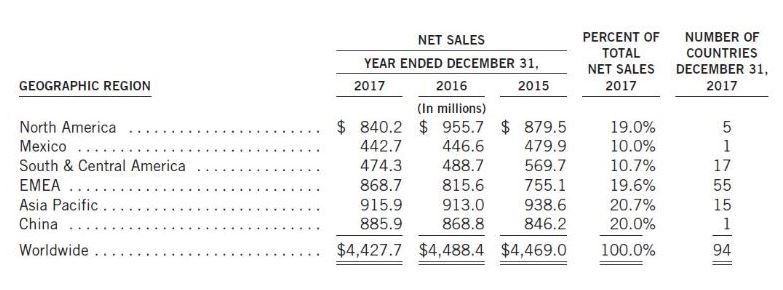
    Herbalife taps the international markets, which leaves it vulnerable to the volatility of foreign currencies, another buysider said. As of 31 December 2017, the company sold its products in 94 countries, according to deal documents.

    “A lot of their earnings are US dollar-based. So the translation to US dollars is a factor, but also making sure the underlying risk is hedged. They have to make sure that there is enough receivable inventory on the balance sheet to be converted to cash,” the buysider said.

    Meanwhile, the company has gone through litigation regarding its sales practices, but three sources said it appeared the company had turned a corner in that respect.

    The Federal Trade Commission (FTC) fined Herbalife USD 200m after filing a complaint in 2016 that charged the company for encouraging participation in “a compensation structure that causes or is likely to cause harm to participants” and “making false or misleading income representations” among other things, according to FTC documents.

    “This settlement will require Herbalife to fundamentally restructure its business so that participants are rewarded for what they sell, not how many people they recruit,” former FTC Chairwoman Ramirez said after the settlement.

    After purchasing products from the company at a wholesale price, participants now receive profits for the items they successfully resell to other parties, as well as if they recruit more participants to do the same, according to deal documents.

    Herbalife still has to contend with a class action lawsuit in Florida. The plaintiffs allege that the company promised them a “guaranteed pathway to attaining life changing financial success,” according to court documents. The judge has set a 22 August hearing on Herbalife’s motion to compel arbitration and to change venue.

    In general, sources said the company’s resolution of previous lawsuits, as well as Ackman’s exit from his short position, had given the company more credibility.

    “The activist angle that played out is now in the past. Also, that sort of tested the model. If it can survive that there must be some legitimacy to the company. To a degree it has vetted them and they’ve come out better off for it,” one of the buysiders said.

    Jefferies declined to comment. Herbalife did not respond to requests for comment.

  • Price whispers on BMC Software’s dual-currency bond offering, which will help finance its USD 8.3bn buyout by KKR, are drifting into the double-digits, according to four buysiders following the transaction. Lead Goldman Sachs has been trying to bring the bond deal to market for some weeks, but pricing pushback and the size of the offering delayed the official launch, two of the buysiders said.

    The bond offering follows a tricky loan syndication, which allocated wide of initial talk in June, after investors expressed concern over the possibility of KKR’s ownership leading to follow-up acquisitions, thereby restricting the amount of free cash flow that would go towards debt reduction, as reported by Debtwire.

    Alongside KKR’s strategy, the success of the deal also hinges on the company’s ability to offset the cyclicality of the sector—specifically in its mainframe segment—and gradually reduce its aggressive 7x total leverage, three additional buysiders said.

    The eight year non-call three USD 1.825bn-equivalent senior unsecured notes offering was launched on Tuesday (31 July), with the roadshow ending 8 August and pricing expected thereafter. The deal will be split between euros and dollars, but tranche sizes have not yet been indicated.

    Unofficial price whispers for the CCC+ rated bond have widened to 9.75%-10% range, having started at 9% area when the deal was launched, according to three of the buyside sources and two traders.

    The buyout will be funded with proceeds from the bonds, the new term loans and revolving credit facilities, USD 300m in PIK preferred equity and a USD 2.1bn sponsor equity contribution, along with cash on hand. Committed financing for the transaction is being provided by Credit Suisse, Goldman, Jefferies, Macquarie and Mizuho Bank, with the deal expected to close in 3Q18, according to a company press release.

    The USD 3.3bn Libor+ 425 (0% floor) TLB due 2025 was last quoted in the 99.956/100.358 context. The EUR 930m Euribor+ 475 (0% floor) TLB due 2025 was last quoted in the 100.124/100.625 context, according to Markit.

    BMC is levered 5x through its new term loans and 7x through the proposed notes offering, based on USD 881.2m in pro forma adjusted LTM EBITDA as of 31 March, and USD 6.219bn total debt, according to company documents. The company estimates USD 890.4m in pro forma LTM EBITDA as of 30 June.

    Stripping out certain adjustments, investors modelled adjusted EBITDA in the low-to-mid USD 800m range, and bond investors are doing the same, said two of the buysiders.

    The company anticipates USD 45m of cost savings for fiscal year 2019, planned independently of the merger, USD 36m of which remain to be realized, according to deal documents. The cost savings include: USD 3m in cost reduction in non-strategic products, USD 9m in performance and compliance, USD 20m in enterprise and sales, USD 1m in reduced headcount in mainframe, USD 4m in professional services and USD 5m in corporate.

    The USD 400m revolver due 2023 will be undrawn at deal close, although the company said it could draw up to USD 50m to fund a possible OID and upfront fees and expenses, according to deal documents. Accounting for cash being used to fund the acquisition, the company will have around USD 62m of cash on hand at deal close.

    The trough is coming

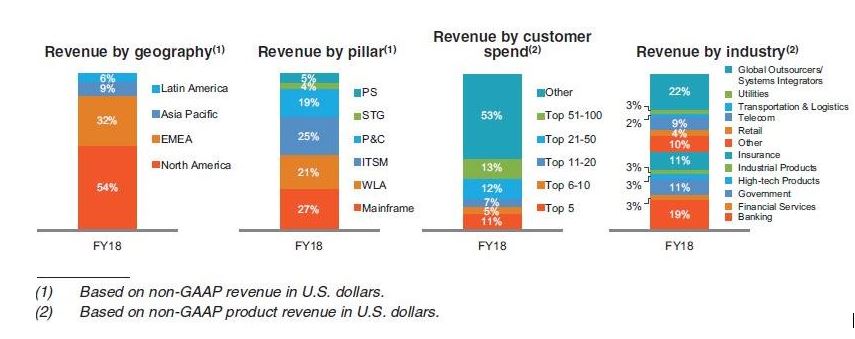
    BMC’s four main segments are mainframe (27% of FY18 revenue), workload automation (21% of FY18 revenue), IT service management (25% of FY18 revenue) and performance and compliance (18% of FY18 revenue), according to deal documents.

    The mainframe segment contracts are locked into three-year increments, with IBM driving the mainframe update cycle and in turn the BMC software update cycle, five of the sources said.

    During the company’s most recent EBITDA trough in 2016, its IT services segment’s on-premises software product Remedy was losing market share to cloud solution company ServiceNow, forcing BMC to make hefty cost cuts, three of the buysiders said. “ServiceNow came out and ate BMC‘s lunch,” one buysider said.

    Although sources agreed with the company’s claim to be better positioned than during the last mainframe downturn, they added that management still has work to do to offset the drop in EBITDA and cash flow that is expected to hit the mainframe business. While the company has moved into cloud services, it faces serious competition, they added.

    “More workload moves to the cloud every day, and mainframe is being used less and less,” said one buysider. “Also, all of these legacy languages are used in mainframe that the baby boomer generation is efficient in. But they’re retiring and those languages are becoming less relevant, so there’s a brain drain happening.”
     

    Two other buysiders said the cyclicality of the mainframe segment was more subjective than many market participants appreciated.

    “Mainframe is not a big concern for me,” said one. “I think people have binary views on this: either you think it’s dying or you are really positive. For me, I don’t think the cycle is going to hit soon. If you look at IBM mainframe sales, the number continues to grow. And mainframe is involved in a lot of important workflow.”

    Three buysiders forecast BMC’s free cash flow at USD 160m-USD 237m (2.6%-3.8% of total debt), based on USD 805m to USD 881m of LTM adjusted EBITDA, USD 29.1m of capitalized software and software-as-a-service development costs, USD 28m of capex (PP&E only), USD 60m in taxes, USD 40m for a one-time cash restructuring cost, and USD 487m in interest expense.

    Sources forecast a decline in EBITDA adjustment of between USD 50m to USD 150m in the next 12 months due to the cyclicality of the mainframe segment.

    Where to from here?

    Private equity sponsors Bain and Golden Gate bought BMC for USD 6.9bn in 2013, with USD 5.5bn financed with loans and bonds. The proceeds of a USD 75m 9%/9.75% holdco PIK toggle note offering due 2019 funded a dividend to the sponsors in 2014.

    When Bain and Golden Gate bought BMC, mainframe technology was declining in popularity, and struggling public software companies like BMC needed structure from private equity sponsors to keep generating earnings and to remain relevant, two of the buysiders said.

    “It was very easy to see what Bain and Golden Gate were doing. They had to take a bloated public company, cut costs, turn operations around and invest in new products,” one of the buysiders said.

    BMC’s adjusted EBITDA margin has gone up to 43% at LTM 31 March from 35% at the time of the 2013 acquisition, according to company documents.

    Although the company is in better shape than it was during the Bain/Golden Gate buyout, it is unclear what KKR will do with the company, hence the push for double-digit pricing on the bonds, three of the buysiders said. One highlighted the lack of a formal deleveraging target as a point of concern.

    “KKR talked about their investment thesis, and said they think there is a lot of organic growth potential,” the buysider said. “They didn’t speak to M&A specifically but that is definitely a concern of investors especially given the leverage profile. There were no questions on dividends, and there was no leverage target given, besides saying they want to get leverage down. It’s always a little better to hear a target.”

    With nearly USD 4.4bn-equivalent in secured debt sitting above the unsecured bonds, potential bondholders would like to see KKR decrease leverage before coming back to the market for debt-funded activities like acquisitions or dividends, three of the buysiders said.

    “My biggest concern would be the sponsor. Our hope is the company is de-levering soon, but with KKR who knows,” one of the buysiders added.

    Sources expect pricing of the proposed notes in line with or a touch tighter than software and hardware company Riverbed Technology because of Riverbed’s exposure to mainframe cyclicality. The CCC+/Caa1 USD 525m 8.875% senior unsecured notes due 2023 last traded on 31 July at 94 to yield 10.56%, according to MarketAxess.

    BMC should come much wider than cloud computing company Rackspace Hosting due to Rackspace’s higher rating and business diversification, a source said. Rackspace’s B/B3 USD 1.2bn 8.625% senior unsecured notes due 2024 last traded at 101.25 to yield 8.266%, according to MarketAxess.

    BMC’s USD 1.625bn 8.125% opco unsecured notes due 2021 last traded at 102.55 to yield 5.299%, up more than 50 points from trades in the 50s in February 2016, and up two points from trades at par in May before the buyout was announced, according to MarketAxess.

    BMC, KKR and Goldman Sachs did not respond to requests for comment.
  • Investors have expressed confidence that Williams Scotsman International can reduce overheads and increase its diversification through its acquisition of ModSpace, with the specialty rentals company’s USD 300m senior secured notes offering set to price today at 6.875%, tight of talk, according to four sources following the deal.

    The USD 300m five year non-call two senior secured notes offering—which is coming through Mason Finance Sub—was launched yesterday (30 July) with whispers in the 7.25%-7.5% area. Lead Deutsche Bank announced official price talk for the B2 rated bond at 7%-7.25% earlier today, and the deal was more than 2x oversubscribed this afternoon, two of the sources said.

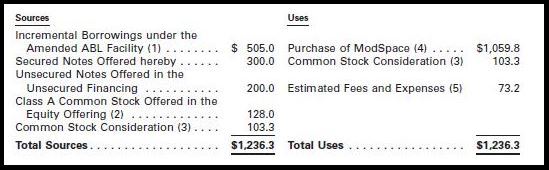
    Along with the secured notes, the company will use ABL borrowings, a private placement of USD 200m unsecured notes, a USD 128m equity raise and a USD 103m common stock consideration to fund the USD 1.1bn acquisition of ModSpace as well as pay fees and expenses.

    After failing to complete the acquisition two years ago as Algeco Scotsman, the company last month announced plans to try again with a stock and cash structure. Williams Scotsman’s stock traded up 25% to USD 15.20 from USD 12.15 on 22 June after the company announcement.

    Pro forma leverage is 5x, based on USD 1.64bn total debt and USD 322.6m of LTM adjusted bank EBITDA, which gives credit for cost synergies for ModSpace, Acton and Tyson Onsite and other acquisition-related costs.

    Based on consolidated pro forma adjusted EBITDA of USD 245.982m as of 31 March—which excludes cost synergies—leverage comes to 6.7x.

    Pro forma liquidity will be USD 882m, based on USD 37m in cash and USD 845m of availability under a new USD 1.35bn ABL revolver. The revolver size could be increased up to USD 1.8bn if certain conditions are met.

    The company could also raise additional equity down the road, two of the sources said. “The stock is doing very well. It is on the upside valuation for me,” the second source said. The stock currently trades at USD 16.70 for a market cap of 1.68bn.

    The new notes offer a slight premium to Williams Scotsman’s USD 300m 7.875% second lien secured notes due 2022, which last traded in size on 25 July at 104.25 to yield 6.453%, according to MarketAxess. Algeco Scotsman’s USD 520m 8% senior secured notes due 2023 last traded in size today at 102.75 to yield 7.105%. The new notes will be pari passu with Williams Scotsman’s existing 2022 notes and the expected privately-placed unsecureds, according to deal documents.

    Both ModSpace and Algeco/Williams Scotsman have struggled with over-levered balance sheets in the past. ModSpace went through a restructuring last year, while Algeco Scotsman sold Williams Scotsman to Double Eagle Acquisition Corp, a special purpose acquisition company, according to SEC filings.

    After the initial deal with ModSpace was terminated in 2016, Algeco restructured its PIK loans last year, and was able to extend its ABL revolver, as Debtwire reported.

    Buysiders expressed confidence that the new deal would open up a path to stronger cash flow generation. “Interest expense was cramping their cash flow,” said one. “This is hopefully freeing that up.”

    However, some buysiders sounded a note of caution, pointing to the company’s history of debt restructurings and poor cash flow generation.

    “The company has had issues with capital allocation in the past,” said another. “They seem to spend a lot of cash flow on buying new equipment. They haven’t exercised enough discipline, and they’ve been through some debt exchanges. It just hasn’t been a good story.”

    Buysiders following the deal said they expected the company to generate USD 14m of free cash flow in 2018 (0.85% of total debt) based on an expected USD 276m of adjusted EBITDA, USD 117m of interest expense and USD 145m of capex. The acquisition should lead to more flexibility on capex going forward because of reduced overheads, the sources added.

    “After the acquisition, they need to wring those synergies from a more overhead perspective. They don’t need two of everything,” one buysider said.

    The modular space time continuum

    With the modular space and portable storage operations business exposed to cyclicality—particularly through the oil and gas sector—buysiders need to have confidence in the company’s operations, three of the sources said.

    Most of the company’s major end markets have a direct positive correlation with the market and GDP, the sources added. “As GDP softens, so does the need or want for their modular units,” said one.

    By far the biggest factor for the company’s earnings is oil, said one buysider: “Oil is in an upswing and we expect that to continue, so we also expect the company to do well after the acquisition.”

    Oil prices have rallied significantly this year, with WTI last quoted at USD 68.94 a barrel, up from its most recent trough of around USD 59 context in early February.

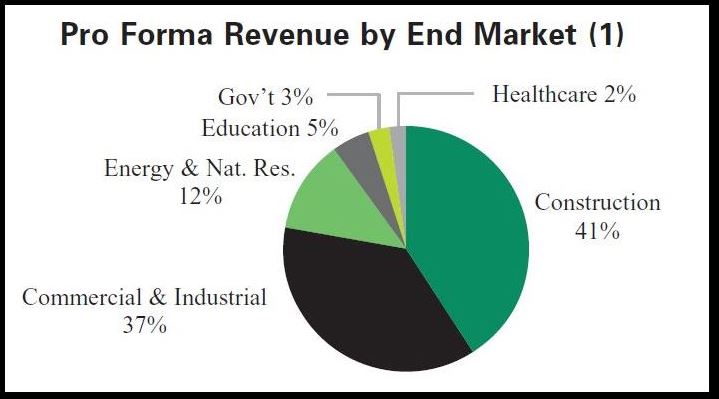
    Bearing in mind the importance of clients in the energy space, the ModSpace acquisition helps diversify William Scotsman’s capabilities, enabling it to benefit from expected growth across the modular space sector in the coming years, said two of the sources.

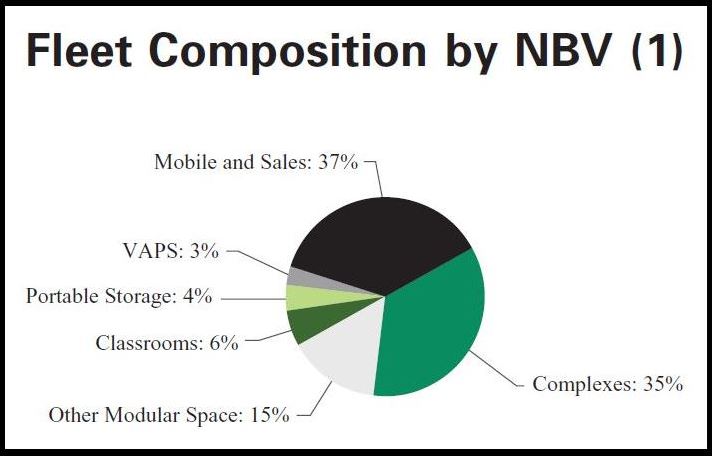
    As of 31 March, William Scotsman’s rental fleet net book value was comprised of 37% mobile and sales, 35% complexes, 6% classrooms, 4% portable storage, 3% value-added products and services and 15% other modular space, according to company documents.

    For the same period, ModSpace’s rental fleet net book value consisted of 29% mobile and sales, 53% complexes, 7% classrooms, 6% portable storage, 1% value-added products and services and 4% other modular space for the same time period, according to company documents.

    The combined company’s historical net book value at 31 March totaled USD 1.913bn, according to company documents.

    “All of these businesses are built as rollups. This acquisition is bigger than they’re used to, but they should be able to handle it,” one buysider said.

    Deutsche Bank declined to comment. The company did not respond to request for comment.

  • Novelis doesn’t yet have committed financing lined up for its USD 2.6bn acquisition of fellow aluminum roller Aleris, but expects to have the deal underwritten within the next few weeks, Novelis CEO Steve Fisher said on an investor call this afternoon.

    The company announced the deal this morning, which includes the assumption of USD 1.8bn in Aleris debt. The acquisition will be fully debt-financed, according to the press release.

    Novelis has over USD 4bn in secured debt capacity that it could utilize for the acquisition, management said on the call. CFO Devinder Ahuja echoed Fisher’s comments on timing, saying the company is “close” to lining up the funds.

    Meanwhile, for its part Aleris issued a pricey USD 400m 10.75% senior secured junior priority bond due 2023 a month ago. The bonds have a special call provision tied to a change of control, in which the company can call the bonds at 102 during the first year and 103 in the second year in connection with a CoC.

    That provision has underpinned trading activity today. The bonds jumped to the 106 area in heavy trading this morning after changing hands at 104.125 yesterday, according to MarketAxess. Since the deal has an exceedingly long time horizon – the company estimates anywhere from nine to 15 months until close – the bonds are trading a few points higher than their expected takeout price, a buysider said.

    Novelis management will likely want to redeem the double-digit coupon bonds as soon as possible, considering that its own cost of capital is substantially lower, several buysiders said.

    Novelis’s USD 1.5bn 5.875% unsecured notes due 2026 traded today at 96.75 yielding 6.4%, in line with recent levels.

    Novelis expects leverage pro forma the merger of just below 4x, and to decline to 3x within two years. Moody’s estimates pro forma leverage at a higher 5.5x level based on LTM figures, according to a ratings note published today.

    Aleris’s capital structure also includes a USD 1.1bn Libor+ 475bps (1% floor) first lien term loan due 2023, also issued last month at a 99 OID. The TLB is quoted in the 100.583/101.25 context, according to Markit.

    The Aleris loan and bond package went through a round of changes during syndication in order to entice investors. At the time, the borrower was 9.5x levered and was attempting to reverse its recent cash burning trend.